
Centennial Insulation › Attic Insulation
Attic Insulation in Centennial, CO
Whole Centennial subdivisions shipped with the same attic: thin blown fiberglass at the code floor of 1985. We bring them to R-49–R-60, sealed first, usually in a single day.
- Free attic depth reading
- Written quote, zero pressure
- Xcel rebate paperwork handled
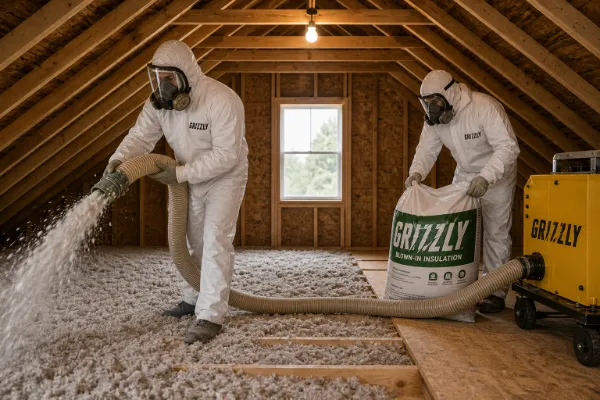
Your local crew, minutes away
Commerce City HQ · all 5 Centennial ZIPs
What did your build year give you?
Centennial attics track their subdivision’s permit date almost exactly. Typical readings against the Zone 5B standard:
- Typical of Centennial build eras. Your exact reading comes photographed with the free inspection.
TRUSTED PRODUCTS & PARTNERS
The Brands Behind Every Grizzly Install
We don’t install mystery material. Every Arvada project uses products from the industry’s most trusted manufacturers.








01THE PROBLEM
The Builder Met Code. Code Moved. Your Attic Didn’t.
Production builders insulate to the minimum that passes inspection, that is the business model. The minimum in 1985 was a third of today’s standard, and blown fiberglass loses loft every decade after. Under a big two-story volume, that gap is the difference between even rooms and a furnace that never rests.
AFiberglass that flattened with the decades
The blown fiberglass of the 70s and 80s compacts, drifts, and thins over can lights and walkways. What measured R-22 at inspection reads R-14 today across Willow Creek and The Knolls, and it never recovers on its own.
BTwo-story volumes stacking the losses
Vaulted foyers and open stairwells drive warm air to the ceiling plane, exactly where thin insulation and builder bypasses wait. Big volume plus thin attic equals stratified rooms and a hardworking furnace.
CHail roofs writing history in the attic
Centennial re-roofs after hail as often as anywhere in the metro, and pre-replacement leaks matte the insulation below. Wet history means dead R-value, we find it, remove it, replace it.
DGreenbelt guests bedding down in the fill
The trail network delivers field mice to Centennial attics every fall, and thin fiberglass makes easy bedding. Contaminated zones get extracted and the reasons sealed, insulation and exclusion in one visit.
02THE FIX
Top-Off the Thin, or Reset the Damaged?
Dry, clean fiberglass gets buried under fresh cellulose; matted or contaminated fill comes out first. The photos decide, not a pitch:
| Top-Off Over ExistingClean, dry builder fill | Extract & RebuildDamaged or contaminated fill | |
|---|---|---|
| How it works | Bypasses sealed, then dense cellulose over the old layer to R-49–R-60 | Degraded fiberglass out through HEPA vacuums, deck sealed, fresh R-49–R-60 |
| Best for | Most 80s–00s Centennial homes with dry, uncontaminated fill | Hail-leak matting, rodent history, or fill too far gone to bury |
| Install time | ✓ One day for most homes | Two days with extraction |
| Cost per R-value | ✓ Lowest cost per added R | More upfront, a clean 40-year reset |
| Air sealing | ✓ Sealing included first, always | ✓ Bare-deck sealing, the best kind |
| Pest deterrence | ✓ Borate cellulose available | , Old nesting material eliminated |
| Eco profile | ✓ Recycled-content material | , Compliant disposal, receipted |
Our verdict: the value play for most Willow Creek, Knolls, and Piney Creek attics. When the reset wins: water staining or droppings in the fill make extraction worth it. See insulation removal in Centennial. | ||
03WHAT TO EXPECT
One Crew, One Day, Forty Years of Code Caught Up.
How an attic day runs in a typical Centennial two-story:
Your inspection plan gets walked at the door, then runners protect the route and everything near the hatch gets covered.
Matted or contaminated fiberglass leaves through a sealed vacuum hose. Dry, healthy fill stays down and becomes free base R-value.
Fireplace chases, dropped soffits, can lights, and the hatch, the production-era shortcuts get foamed, capped, and gasketed.
Depth rulers across the deck, then cellulose to 14–17 inches, R-49 to R-60 after settling, wall to wall, no thin spots over the garage.
Final depths photographed at multiple points, the route swept, debris gone. The upstairs bedrooms notice by bedtime.
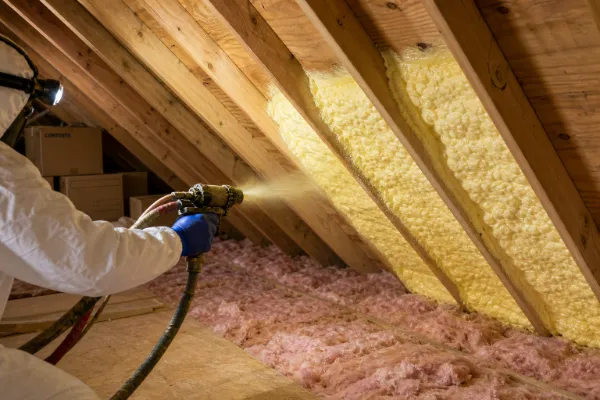
The Grizzly 100% Guarantee
If the work isn't right, we make it right. That's the reputation we've built across the Front Range, and it's our only sales pitch.
04COST & SAVINGS
What Attic Insulation Costs in Centennial
A Knolls split-level and a Piney Creek two-story price differently, so the tape measure decides. Four drivers, itemized after a free inspection.
Attic footprint
The square footage we seal and cover
Current depth
How far the builder fill sits from R-49
Bypass count
Chases, soffits, cans, and hatch condition
Extraction needs
Only if fill is matted or contaminated
Three ways the net cost drops
Xcel Energy rebates
Centennial is Xcel territory, qualifying attic and sealing work earns rebates we flag in your estimate.
Federal 25C tax credit
30% of qualifying insulation costs, up to $1,200 per year, under the Inflation Reduction Act.
The biggest lever in the house
In a builder-minimum two-story, the attic upgrade outperforms any window or furnace spend per dollar.
★ ★ ★ ★ ★
"Our Homestead Farm two-story read R-17 up top, 1984 original. Sealed and topped to R-60 in a day. The upstairs finally matches the thermostat, and January’s bill dropped enough to notice."
S
Scott & Amy D.
Homeowners · Homestead Farm, Centennial · Sealing + Attic Top-Off
05QUESTIONS
Attic Insulation in Centennial, Answered Straight
R-49 to R-60 for Climate Zone 5B, roughly 14 to 17 inches of blown cellulose. Homes from Centennial’s big build decades typically carry R-14 to R-25 today. Your free inspection returns the exact figure with photos.
Footprint, current depth, bypass count, and any extraction set the number. A straightforward top-off on a dry attic is the common case and the lightest ticket. Every factor appears as a line item in writing before you commit.
Only if it is matted from hail-era leaks or contaminated by rodents. Dry, clean fill stays put as base R-value, your budget goes into depth instead of disposal. We photograph the evidence and quote both paths when it is genuinely close.
Because its floor sits over an unconditioned garage with wind-washed batts and open cavity edges, a builder-era shortcut. The fix is foam and sealing in the garage ceiling, often paired with the attic work in the same visit.
One day for most Centennial attics, sealing included. Extraction-first projects and bonus-room additions typically run two. Timeline in writing with the quote.
That is the primary payoff. Sealing the ceiling bypasses stops the stack-driven losses, and R-49+ overhead slows the summer bake and winter drain. Upstairs-downstairs spread narrows immediately, most owners notice night one.
06EVERY COMMUNITY WE SERVE
Attic Insulation Near Centennial
DenverArvadaLakewoodEnglewoodCentennialLittletonGoldenGreenwood VillageBoulderLafayetteHighlands RanchLouisvilleErieEvergreenCastle Rock
07GET STARTED
Catch the Attic Up to the Mortgage.
Free inspection with photographed depth readings. Honest top-off-or-reset call. Most Centennial attics finished in one day.
- (303) 854-6221 · Mon–Sat 8 AM–5 PM · Sun by appointment
- info@grizzlyinsulationco.com, fast replies, usually same day
- 7140 Ivy St Unit B, Commerce City, CO 80022, 10 miles from Arvada
Get Your Free Attic Quote
Takes 30 seconds. We reply within 24 hours.
Stop Heating
the Outdoors.
Tell us what’s going on with your home and we’ll map out the fix, warmer rooms, lower Xcel bills, and no critters in the walls.
- Free on-site assessment, no obligation
- 150+ Denver-area projects completed
- Insured, certified & 100% guaranteed
- Xcel rebate paperwork handled for you
(303) 854-6221
Get Your Free Quote in 30 Seconds
We reply within 24 hours, usually the same day. No pressure, no spam.
🔒 Your info stays private. No spam calls, ever.