
Castle Rock Insulation › Batt Insulation
Batt Insulation in Castle Rock, CO
In Castle Rock, Founders Village two-stories, Meadows basements, Historic Downtown additions, batt insulation fills the framed cavities, cut to fit and sealed at the rim.
- Free wall & floor inspection
- Itemized quote, no pressure
- Xcel rebate guidance
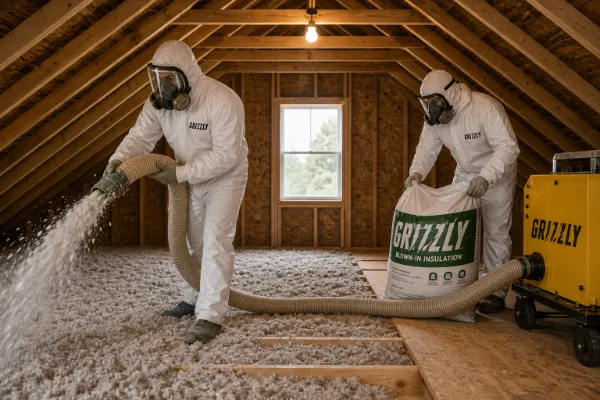
Your Front Range crew
Based in Commerce City, serving Castle Rock and the metro
Where do your walls and floors stand?
A batt stamped R-21 only performs like an R-21 if it sits full and uncompressed in the cavity, squeeze it behind a pipe, leave a gap at the top plate, or stuff it around wiring and you can lose a third of that rating before the drywall even goes up. In Climate Zone 5B, which covers every Castle Rock elevation from downtown to The Meadows, that means aiming for roughly R-20 to R-21 in walls and R-30 or better in floors over unheated space, fitted correctly the first time.
- Measured during free inspections across Castle Rock housing stock. Your exact number comes with your assessment.
TRUSTED PRODUCTS & PARTNERS
The Brands Behind Every Grizzly Install
Every batt we install in a Castle Rock home comes from manufacturers with a track record, Owens Corning, Johns Manville, and Rockwool, so you know exactly what’s in your walls, not a mystery roll pulled from a bargain pallet.







01THE PROBLEM
The Rooms Batt Insulation Fixes Are the Ones You Avoid.
Castle Rock’s mix of older Historic Downtown cottages and fast-built 1990s and 2000s subdivision homes around The Meadows and Founders Village both produce the same complaint: one room that never quite matches the rest of the house. It’s often the bonus room over the garage, baking in July sun and freezing by 6 a.m. once that big day-night temperature swing sets in, or a basement that stays clammy no matter the thermostat setting. At 6,200 feet, the sun is intense enough to heat a room fast and the nights cool off just as fast, so any gap in the cavity insulation shows up as a real comfort problem, not a minor one. Nine times out of ten, it comes down to insulation that’s missing, thin, or was stuffed in around wiring and plumbing without ever being fitted properly.
ABonus rooms and offices over the garage
Bonus rooms and home offices framed above an attached garage sit over unconditioned space, so heat drains through the floor while the garage pulls it away below. You get cold floors, a room running 10–15° off the rest of the house, and a furnace that never catches up. We insulate the floor joists, knee walls, and sloped ceilings, then air-seal the garage ceiling and rim.
BFinished basements with bare foundation walls
Most Castle Rock basements, the brick ranches east of Wadsworth, the split-levels around Lake Arbor, have bare concrete or block foundation walls. Finishing that basement without insulating the walls first buys you a cold, clammy room and a heating bill to match. Batts in the new stud walls, with the correct vapor retarder, turn it into comfortable, usable square footage.
CAdditions and pop-tops built to the minimum
Additions, pop-tops, and finished attic conversions are often framed to the minimum of their day, or never insulated in the walls at all. That leaves one part of the house always chasing the thermostat. Filling the wall, floor, and rafter cavities with properly sized batts brings the new space up to the same comfort as the original home.
DSound carrying between rooms and floors
Insulation isn’t only about temperature. Batts packed into interior walls and between floors cut the sound that travels between a media room and the bedrooms, an office and the living room, or upstairs and down. Mineral wool does this best. It’s a small add during a remodel that quietly changes how the whole house feels.
02THE FIX
Fiberglass or Mineral Wool. One Honest Recommendation.
We start every Castle Rock estimate by opening up the problem cavities and looking, not guessing. Most wall and floor cavities get standard fiberglass batts, sized and faced for that specific space; where fire separation or sound control actually matters, a shared wall with a home office, or framing near a fireplace, we’ll recommend mineral wool instead. You’ll get one clear recommendation per room, not an upsell menu.
| Fiberglass BattsMost walls & floors | Mineral Wool BattsThe fire & sound upgrade | |
|---|---|---|
| How it works | Cut-to-fit batts friction-fitted in every stud and joist bay to R-13–R-30 | Denser rock-wool batts that add fire resistance and quiet |
| Best for | Basement walls, bonus-room floors, additions, interior walls | Garage-to-house walls, shared walls, mechanical rooms, sound control |
| Install time | ✓ One day for most homes | 1–2 days |
| Cost per R-value | ✓ Lowest | Higher upfront, fire & sound benefit |
| Air sealing | ✓ Rim & top plates sealed first | ✓ Rim & top plates sealed first |
| Pest deterrence | ✓ Borate-treated options available | , Naturally fire-resistant |
| Eco profile | ✓ Recycled-content material | , Stone & recycled slag |
Our verdict: the right answer for most basement, bonus-room, and addition projects. When foam wins: an open attic floor or a tight cathedral bay. See spray foam in Castle Rock. | ||
03WHAT TO EXPECT
A Half-Day Inside. Here's How It Goes.
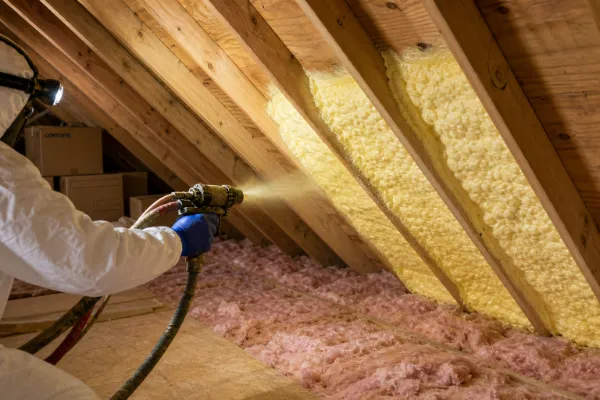
A typical Castle Rock batt job starts with a walkthrough and cavity check, moves into cutting and fitting batts room by room, and wraps with a final walkthrough where we show you the sealed rim joists and faced batts before we close anything up, most projects wrap in half a day.
We confirm the plan from your assessment, then protect floors and finishes around the work area.
We clear each bay, check wiring and boxes, and flag where a vapor retarder or fire-rated batt is required by code.
Batts cut to fit every stud, joist, and rafter bay, friction-fit with no gaps or compression, notched neatly around wiring and outlets, and faced the correct way.
Rim joists, top plates, and penetrations sealed so the batts actually deliver their rated R-value.
We vacuum up, haul away offcuts, and walk every cavity with you before we leave.
The Grizzly 100% Guarantee
If the work isn't right, we make it right. That's the reputation we've built across the Front Range, and it's our only sales pitch.
04COST & SAVINGS
What Batt Insulation Costs in Castle Rock
No two batt jobs in Castle Rock price the same, because the number depends on how much cavity area you’re actually filling, how much prep the space needs, whether we’re air-sealing the rim joist and penetrations along the way, and whether old, sagging insulation has to come out first. A cramped Historic Downtown crawlspace access costs differently than an open Meadows basement wall. Either way, you get an itemized quote before we start, not a round number pulled from a phone call.
Cavity area (sq ft)
The floor area we seal and cover
Current R-value
How far each cavity sits below its target R-value
Air-sealing scope
Can lights, chases, and hatch condition
Removal needs
Only if material is soiled or damaged
Three ways the net cost drops
Xcel Energy rebates
Qualifying insulation + air-sealing upgrades earn utility rebates across Castle Rock. We flag what applies in your estimate.
Federal 25C tax credit
30% of qualifying insulation costs, up to $1,200 per year, under the Inflation Reduction Act.
Lower bills, every month
Heating and cooling dominate Front Range energy bills, and unconditioned walls and floors are among the highest-impact upgrade point in most Castle Rock homes.
★ ★ ★ ★ ★
Our basement in The Meadows had bare foundation walls since we moved in, and the room over the garage was unusable in winter. Grizzly cut the batts tight around every stud and sealed up the rim joist, and both rooms actually hold heat now, the garage room isn't 10 degrees colder than the rest of the house anymore, and we don't hear the kids' TV through the floor either.
D
David R.
05QUESTIONS
Batt Insulation in Castle Rock, Answered Straight
Prefer to just ask?
Call (303) 854-6221 and talk to the same crew that will actually be in your Castle Rock home, we’ll walk the space, point out what’s missing, and give you a free, no-pressure assessment.
Batt insulation is pre-cut rectangular sections of fiberglass or mineral wool sized to fit standard stud and joist spacing. In a Castle Rock home we install it in exterior wall cavities, floors over garages or crawlspaces, basement walls, additions, and interior walls where sound control matters.
Neither is universally better, it depends on the cavity. Fiberglass is the workhorse for most Castle Rock wall and floor cavities, cost-effective and easy to fit; mineral wool costs more but resists fire and blocks sound noticeably better, which is why we reach for it around fireplaces, shared walls, or a home office that backs up to a bedroom.
In most Founders Village and Meadows two-story homes, yes, a bonus room over the garage is usually cold because the floor cavity was under-insulated or the batts were stuffed in loosely during original construction. Cutting properly sized batts to fill that floor cavity and sealing the perimeter typically closes most of the temperature gap between that room and the rest of the house.
In Climate Zone 5B, which includes all of Castle Rock, faced batts with the vapor barrier facing the warm-in-winter side (toward the living space) are standard for exterior walls. We check facing direction on every install, a vapor barrier installed backwards can trap moisture instead of blocking it.
Batts win in open, accessible framed cavities like new construction, additions, and basement walls where you can fit and seal them precisely. Blown-in makes more sense for finished walls or irregular attic spaces you can’t easily open up, and spray foam earns its higher cost mainly at rim joists and hard-to-seal gaps. For most Castle Rock wall and floor jobs, correctly fitted batts perform just as well for a lot less money.
Yes, especially with mineral wool in interior walls, it absorbs sound rather than letting it pass through the empty cavity. Homeowners in denser Castle Rock developments like The Meadows often add it between a home office or bedroom and the rest of the house specifically to cut down on noise transfer, not just for temperature.
06EVERY COMMUNITY WE SERVE
Batt Insulation Near Castle Rock
Castle RockArvadaAuroraBoulderBrightonBroomfieldCentennialColorado SpringsCommerce CityDenverEnglewoodFort CollinsGoldenGreeleyHighlands RanchLafayetteLakewoodLittletonLongmontParkerWestminster
07GET STARTED
Find Out Which Rooms Are Costing You.
Your home, your call, we’re just here to help it hold heat.
- (303) 854-6221 · Mon–Sat 8 AM–5 PM · Sun by appointment
- info@grizzlyinsulationco.com, fast replies, usually same day
- 7140 Ivy St Unit B, Commerce City, CO 80022, 10 miles from Castle Rock
Get Your Free Batt Quote
Takes 30 seconds. We reply within 24 hours.
Stop Heating
the Outdoors.
Tell us what’s going on with your home and we’ll map out the fix, warmer rooms, lower Xcel bills, and no critters in the walls.
- Free on-site assessment, no obligation
- 150+ Denver-area projects completed
- Insured, certified & 100% guaranteed
- Xcel rebate paperwork handled for you
(303) 854-6221
Get Your Free Quote in 30 Seconds
We reply within 24 hours, usually the same day. No pressure, no spam.
🔒 Your info stays private. No spam calls, ever.