
Loveland Insulation › Attic Insulation
Attic Insulation in Loveland, CO
Most older Loveland attics hold R-11 to R-19 — and downtown Loveland’s craftsman bungalows and brick homes often measure close to zero. Zone 5B calls for R-49 to R-60. In a windy Front Range city, that gap shows up as cold rooms and steep bills. Grizzly closes it, usually in a day.
- Free attic inspection
- Itemized quote, no pressure
- Xcel rebate guidance
Your local crew, 10 miles away
Commerce City HQ · all 5 Loveland ZIPs
Where does your attic stand?
R-value measures how well insulation resists heat flow — the higher the number, the better your home holds temperature. Here’s how typical Loveland attics compare to the Zone 5B standard:
- Measured during free inspections across Loveland housing stock. Your exact number comes with your assessment.
TRUSTED PRODUCTS & PARTNERS
The Brands Behind Every Grizzly Install
We don’t install mystery material. Every Loveland project uses products from the industry’s most trusted manufacturers.








01THE PROBLEM
Heat Rises. In an Old Loveland Cottage, It Just Leaves.
On a subzero January night, an under-insulated attic bleeds furnace heat straight through the roof — and in Loveland’s older cottages there’s often little up there to slow it. In July, that thin attic bakes the upstairs. The attic is where a Loveland home wins or loses the comfort battle.
AInsulation that settled decades ago
Downtown Loveland’s early-1900s craftsman bungalows and brick homes were built before insulation was standard; the 1990s–2000s homes in Centerra and Big Thompson River got code-minimum R-19. Both have thinned or settled over time. What looks like a covered attic floor is often performing at half spec — or less.
BAir leaks feeding the stack effect
Can lights, attic hatches, flues, and chases leak warm air upward. Loveland’s Front Range wind supercharges that stack effect — which is why we air-seal the ceiling plane before a single inch of insulation goes down.
CRodent-damaged material near open space
Each fall, mice move from Big Thompson River, Lake Loveland, and the surrounding open space into warm attics. Soiled insulation loses R-value and degrades indoor air quality, so it comes out — cleanly — before new material goes in.
DOld code minimums in newer neighborhoods
Even newer builds in Centerra and Mariana Butte met the code of their day, not today’s R-49–R-60. A one-day top-off brings them current and cuts the heating load.
02THE FIX
Two Proven Paths. One Honest Recommendation.
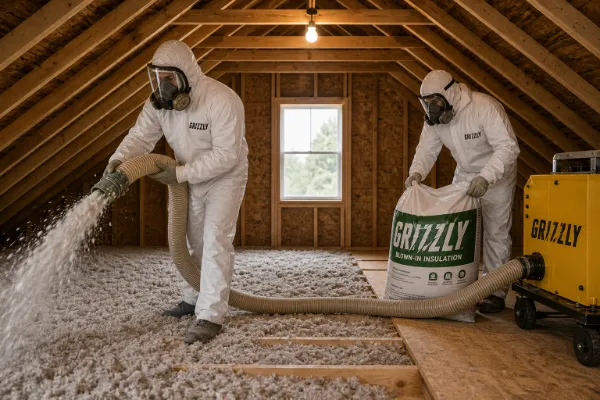
We inspect first, then recommend only what your attic needs. Most Loveland homes are best served by blown-in cellulose; some older cottages need dense-pack walls or spray foam too. We’ll tell you which — and why.
| Blown-In CelluloseMost Loveland attics | Spray Foam (Roofline)The airtight premium option | |
|---|---|---|
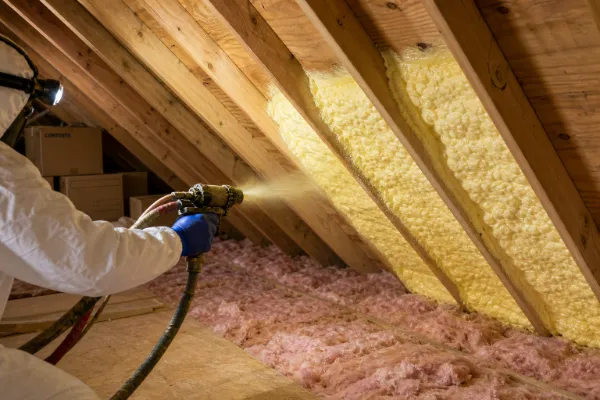
| How it works | Dense cellulose blown over the attic floor to R-49–R-60 | Closed-cell foam applied at the roofline, creates a conditioned attic |
| Best for | Ranches, split-levels, top-offs over clean existing insulation | Vaulted ceilings, HVAC equipment in the attic, chronic ice dams |
| Install time | ✓ One day for most homes | 1–2 days |
| Cost per R-value | ✓ Lowest | Higher upfront, strongest envelope |
| Air sealing | ✓ Included as a separate step first | ✓ Built into the foam itself |
| Pest deterrence | ✓ Borate-treated options available | , Not a pest product |
| Eco profile | ✓ Recycled-content material | , Petroleum-based |
Our verdict: the right answer for most downtown Loveland, east Loveland, and Lake Loveland homes. When foam wins: furnace in the attic, vaulted ceilings, or returning ice dams. See spray foam in Loveland. | ||
03WHAT TO EXPECT
One Day on Your Street. Here's How It Goes.
A typical Loveland attic insulation project, from first knock to final walkthrough:
We confirm the plan from your inspection, then protect flooring, HVAC equipment, and anything stored near the attic access.
Rodent-soiled or water-damaged material comes out through HEPA-filtered vacuums. Clean existing insulation stays and gets topped off.
Every can light, hatch, flue, and top-plate gap sealed with foam or caulk. Insulation over air leaks is money over a hole.
Rulers installed across the attic floor, then cellulose blown to the depth that delivers R-49+ after natural settling, 14 to 17 inches.
Depth checked and photographed at multiple points, work area cleaned, debris hauled away. You feel the difference that night.
The Grizzly 100% Guarantee
If the work isn't right, we make it right. That's the reputation we've built across the Front Range, and it's our only sales pitch.
04COST & SAVINGS
What Attic Insulation Costs in Loveland
No two attics price the same, so we don’t quote from a script. Four things move the number, and you’ll see each one itemized in writing after a free inspection, before you commit to anything.
Attic square footage
The floor area we seal and cover
Current R-value
How far your attic is from R-49
Air-sealing scope
Can lights, chases, and hatch condition
Removal needs
Only if material is soiled or damaged
Three ways the net cost drops
Xcel Energy rebates
Qualifying attic insulation + air-sealing upgrades earn utility rebates across Loveland. We flag what applies in your estimate.
Federal 25C tax credit
30% of qualifying insulation costs, up to $1,200 per year, under the Inflation Reduction Act.
Lower bills, every month
Heating and cooling dominate Front Range energy bills, and the attic is the highest-impact upgrade point in most Loveland homes.
★ ★ ★ ★ ★
“They measured our downtown Loveland cottage at almost R-0 in the attic, explained every line of the quote, and had air sealing plus blown-in cellulose done in a day. Warm for the first winter in years.”
D
David R.
Homeowner · downtown Loveland, Loveland · Air Sealing + Attic Insulation
05QUESTIONS
Attic Insulation in Loveland, Answered Straight
Loveland sits in IECC Climate Zone 5B, where attics should carry R-49 to R-60, roughly 14–17 inches of blown-in cellulose. Most pre-1980 Loveland homes we inspect measure R-11 to R-19. Your free assessment includes depth measurements at multiple points, so you see the exact gap in inches before any quote.
Four factors set the price: attic square footage, current R-value, air-sealing scope, and whether old material needs removal. You get a fully itemized written quote after a free inspection, and Xcel Energy rebates plus the federal 25C tax credit (30% of qualifying costs, up to $1,200/year) reduce the net cost for most Loveland projects. Financing is available.
Blown-in cellulose is the cost-effective answer for open attic floors and top-offs, that’s most Loveland homes. Spray foam earns its premium when HVAC equipment lives in the attic, ceilings are vaulted, or ice dams keep returning. We inspect first and recommend only what your attic needs.
Only when necessary. Clean, dry material gets topped off, the budget-friendly path. Rodent-soiled, moldy, or water-damaged insulation comes out first via HEPA-filtered removal. Homes near Big Thompson River, Lake Loveland, and Lake Loveland need this most often.
Most Loveland attics are air sealed and insulated in a single day, removal projects typically run one to two days. Your quote includes a firm timeline, and we stick to it.
In most cases, yes. Ice dams form when attic heat melts roof snow that refreezes at the cold eaves. Air sealing plus R-49+ insulation removes the heat source, the permanent fix, versus roof rakes and heat cables that only treat the symptom. We correct attic ventilation where needed too.
06EVERY COMMUNITY WE SERVE
Attic Insulation Near Loveland
DenverLovelandLakewoodEnglewoodCentennialLittletonGoldenGreenwood VillageBoulderLafayetteHighlands RanchLouisvilleErieEvergreenCastle Rock
07GET STARTED
Find Out What Your Attic Is Costing You.
Free inspection. Exact R-value reading. Itemized quote with rebate guidance. Zero pressure, and most attics fixed in one day.
- (303) 854-6221 · Mon–Sat 8 AM–5 PM · Sun by appointment
- info@grizzlyinsulationco.com, fast replies, usually same day
- 7140 Ivy St Unit B, Commerce City, CO 80022, 10 miles from Loveland
Get Your Free Attic Quote
Takes 30 seconds. We reply within 24 hours.
Stop Heating
the Outdoors.
Tell us what’s going on with your home and we’ll map out the fix, warmer rooms, lower Xcel bills, and no critters in the walls.
- Free on-site assessment, no obligation
- 150+ Denver-area projects completed
- Insured, certified & 100% guaranteed
- Xcel rebate paperwork handled for you
(303) 854-6221
Get Your Free Quote in 30 Seconds
We reply within 24 hours, usually the same day. No pressure, no spam.
🔒 Your info stays private. No spam calls, ever.