

How Thick Is R5 Insulation in a Denver Home?

DIY Garage Insulation: What You Can Do Yourself and What Needs a Pro
Yes, you can do a lot of garage insulation on your own. Most handy homeowners can put a kit on the garage door, replace the weatherstripping, lay batts into open stud walls and hang drywall over them. Where we’d stop you: spray foam, the ceiling under a bedroom, walls that already have drywall on them, …
More
2 Hour Fire-Rated Spray Foam Insulation: What Fire Ratings Spray Foam Can Actually Meet
You can’t buy a spray foam that’s 2 hour fire rated on its own. That rating only ever goes to a whole wall, floor or ceiling that got tested in a lab as one piece. Spray foam can be one of the layers inside a 2 hour wall, though. By itself, most spray foam gets …
More
Firestop Insulation: How Firestopping Differs From Fire Rated Insulation
Short version: firestopping seals the holes, and fire rated insulation fills the wall. When a plumber or electrician drills through a fire-rated wall or floor, they leave an opening. Firestopping is the tested system that closes that opening back up so fire and smoke can’t get through. Fire rated insulation is the stuff inside the …
More
Cellulose Insulation R-Value per Inch: Dense Pack vs Loose Fill Explained
Cellulose insulation gives you about R-3.2 to R-3.8 per inch, and most products settle somewhere around R-3.5 to R-3.7. Here’s what surprises people: dense pack and loose fill have almost the same R-value per inch. So what’s the real difference? Density, settling and airflow. Loose fill goes into open attics at about 1.2 to 1.6 …
More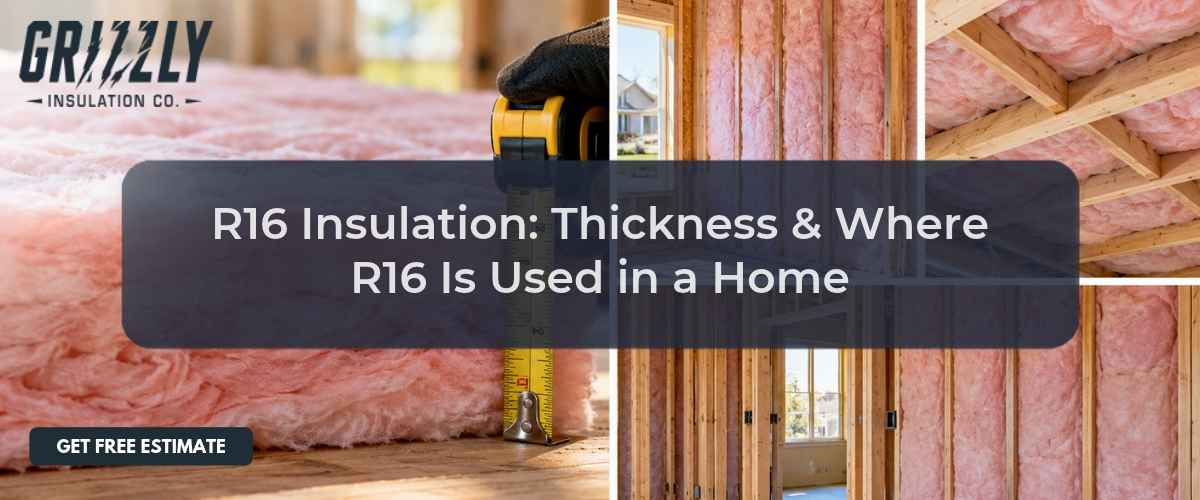
R16 Insulation: How Thick It Is and Where R16 Is Used in a Home
R16 insulation is about 2.5 inches thick in closed-cell spray foam or polyiso foam board, and about 3.2 inches in XPS foam board. Don’t bother looking for an R16 fiberglass batt at a U.S. store, because there isn’t a common one. Where R16 actually shows up is on basement walls, crawl space walls, rim joists, …
More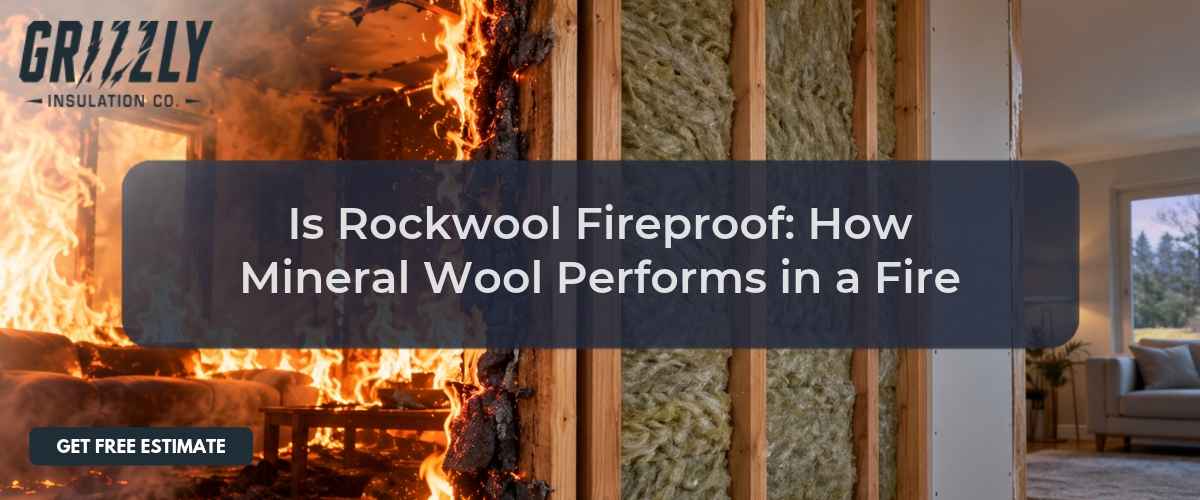
Is Rockwool Fireproof? How Mineral Wool Insulation Performs in a Fire
No, Rockwool isn’t fireproof. Nothing you build a house with is. What Rockwool is, though, is noncombustible. It won’t burn, and it won’t feed a fire. ROCKWOOL’s stone wool holds up to about 2,150°F (1,177°C) before it melts, and most house fires don’t get that hot. In a real fire, that means Rockwool stays put …
More
Thermal Acoustic Insulation: Can One Product Handle Both Heat and Sound?
Mineral wool, fiberglass and dense pack cellulose all slow heat and soak up noise in the same wall. When a homeowner asks us for one material that does both, we usually point to mineral wool. It’s dense, it won’t burn, and a 2×4 wall of it comes in around R-15. Insulation alone only nudges a …
More
R40 Insulation: How Thick It Is and Where R40 Is Used in a Home
R40 insulation is about 11 to 12 inches thick in cellulose or fiberglass batts. In blown fiberglass, it’s closer to 16 inches. Closed-cell spray foam gets there in about 6. You’ll find R40 mostly on attic floors and in vaulted ceilings. Now for the part most guides skip. R40 isn’t enough for a Denver attic. …
More
- Insured & Certified
- 100% Guarantee
- Free Estimates