
Denver Insulation › Blown-In Insulation
Blown-In Insulation in Denver, CO
In Denver, Baker bungalows, Wash Park ranches, Central Park builds, attics lose R-value as loose-fill compacts. Blown-in restores even, full-depth coverage corner to corner.
- Free attic depth inspection
- Itemized quote, no pressure
- Xcel rebate guidance
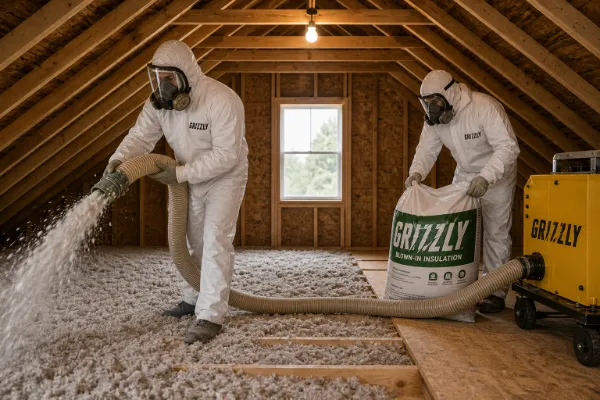
Your Front Range crew
Based in Commerce City, serving Denver and the metro
Where does your attic actually stand?
Attic R-value is really a function of even depth and full coverage, not just what type of insulation is up there. Settled or patchy loose-fill, common in Denver’s older attics, underperforms even when it looks fine from the hatch, so we install and verify to the Climate Zone 5B target of R-49 to R-60.
- Measured during free inspections across Denver housing stock. Your exact number comes with your assessment.
TRUSTED PRODUCTS & PARTNERS
The Brands Behind Every Grizzly Install
No unfamiliar brand names, no guesswork. Every Denver attic we work on gets trusted, code-rated cellulose or fiberglass loose-fill suited to that home’s construction.






01THE PROBLEM
The Attic Problems Blown-In Insulation Quietly Solves.
Denver’s housing stock runs the gamut, and each era brings its own attic issue. Baker and Wash Park’s early-1900s bungalows and brick Victorians often have shallow original insulation compacted after decades under the roof deck, while postwar ranches nearby got minimal attic insulation to begin with. Central Park’s newer builds usually start closer to code but rarely get topped off as insulation naturally settles. Across all of them, under-depth or gappy loose-fill combined with unsealed air leaks, not the furnace, is what drives the hot-upstairs, high-bill complaints we hear.
A · Attics still sitting at an old R-19 to R-30
Bonus rooms and home offices framed above an attached garage sit over unconditioned space, so heat drains through the floor while the garage pulls it away below. You get cold floors, a room running 10–15° off the rest of the house, and a furnace that never catches up. We insulate the floor joists, knee walls, and sloped ceilings, then air-seal the garage ceiling and rim.
B · Loose-fill that has settled, thinned, or gone flat
Most Denver basements, the brick ranches east of Wadsworth, the split-levels around Lake Arbor, have bare concrete or block foundation walls. Finishing that basement without insulating the walls first buys you a cold, clammy room and a heating bill to match. Blown-Ins in the new stud walls, with the correct vapor retarder, turn it into comfortable, usable square footage.
C · Bare patches, gaps, and wind-washed eaves
Additions, pop-tops, and finished attic conversions are often framed to the minimum of their day, or never insulated in the walls at all. That leaves one part of the house always chasing the thermostat. Filling the wall, floor, and rafter cavities with properly sized blown-in insulation brings the new space up to the same comfort as the original home.
D · Ice dams and a top floor that never holds heat
Insulation isn’t only about temperature. Blown-Ins packed into interior walls and between floors cut the sound that travels between a media room and the bedrooms, an office and the living room, or upstairs and down. Mineral wool does this best. It’s a small add during a remodel that quietly changes how the whole house feels.
02THE FIX
Cellulose or Fiberglass. One Honest Recommendation.
We inspect the attic first, on every job, to see what’s actually there rather than assume based on the home’s age. Air leaks around can lights, plumbing stacks, and the attic hatch get sealed, eave baffles go in to protect soffit ventilation, and then we recommend cellulose or fiberglass loose-fill, one honest call based on your attic’s condition, not a default upsell.
| Blown CelluloseMost walls & floors | Blown FiberglassThe fire & sound upgrade | |
|---|---|---|
| How it works | Recycled cellulose blown evenly across the attic floor to R-49–R-60 | Blown fiberglass that resists moisture and settles less over time |
| Best for | Attic floors, topping off thin insulation, low-slope attics | Damp-prone attics and homes that want minimal settling |
| Install time | ✓ A few hours for most attics | 1–2 days |
| Cost per R-value | ✓ Lowest | Higher upfront, fire & sound benefit |
| Air sealing | ✓ Rim & top plates sealed first | ✓ Rim & top plates sealed first |
| Pest deterrence | ✓ Borate-treated options available | , Naturally fire-resistant |
| Eco profile | ✓ Recycled-content material | , Sand & recycled glass |
Our verdict: the right answer for most attic insulation and top-off projects. When foam wins: a vaulted or cathedral ceiling with no attic access. See spray foam in Denver. | ||
03WHAT TO EXPECT
A Half-Day Inside. Here's How It Goes.
A typical Denver attic job starts with a walkthrough and attic inspection, moves into air-sealing and baffle installation, then the crew blows insulation to a marked target depth with the machine. Most homes, from a Baker bungalow to a Central Park two-story, are finished in a few hours.
We confirm the plan from your assessment, then protect floors and finishes around the work area.
We air-seal top plates, can lights, and the attic hatch, then set baffles at the eaves so airflow cannot wind-wash the new insulation.
Loose-fill is machine-blown evenly across the attic floor to the marked depth, filling every gap around joists, ducts, and penetrations.
We check coverage against depth-ruler cards staked across the attic so you hit the rated R-value corner to corner.
We vacuum up, haul away offcuts, and walk every cavity with you before we leave.
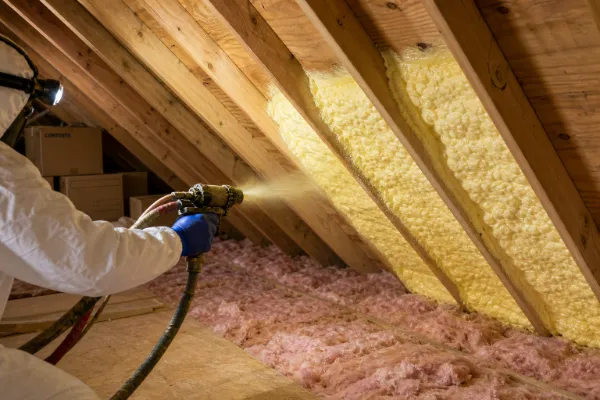
The Grizzly 100% Guarantee
If the work isn't right, we make it right. That's the reputation we've built across the Front Range, and it's our only sales pitch.
04COST & SAVINGS
What Blown-In Insulation Costs in Denver
Denver attic pricing depends on attic square footage, the target depth and R-value needed, how much air-sealing the job calls for, and whether old, soiled, or matted insulation needs to be removed first. You’ll get an itemized quote before we schedule any work.
Attic square footage
The attic floor area we cover to target depth
Current attic R-value
How far your attic sits below the Zone 5B target
Air-sealing & baffles
Top plates, can lights, hatch, and eave baffles
Removal needs
Only if material is soiled or damaged
Three ways the net cost drops
Xcel Energy rebates
Qualifying insulation + air-sealing upgrades earn utility rebates across Denver. We flag what applies in your estimate.
Federal 25C tax credit
30% of qualifying insulation costs, up to $1,200 per year, under the Inflation Reduction Act.
Lower bills, every month
Heating and cooling dominate Front Range energy bills, and unconditioned walls and floors are among the highest-impact upgrade point in most Denver homes.
★ ★ ★ ★ ★
Our bungalow in Baker had a second floor that was unbearable by July and always felt drafty in winter. After Grizzly air-sealed the attic and topped off the insulation, the temperature difference between floors is barely noticeable now, even on the hottest days.
D
David R.
05QUESTIONS
Blown-In Insulation in Denver, Answered Straight
Prefer to just ask?
Call the Grizzly crew that will actually be climbing into your attic, (303) 854-6221, for a free, no-pressure assessment anywhere in Denver.
Blown-in insulation is loose-fill cellulose or fiberglass that’s machine-blown across an attic floor to a measured depth, filling in around joists, wiring, and irregular framing that batts leave gapped. In Denver, it’s used both for insulating bare attics and for topping off older homes whose insulation has thinned.
It depends on the attic. Dense-packed, borate-treated cellulose settles less and offers strong fire and pest resistance, useful in Denver’s older homes with tighter attic spaces; fiberglass resists moisture better and holds its loft, which suits attics with more ventilation. We inspect and recommend one, not both.
In most cases, yes, blown-in insulation can be added directly over existing attic insulation as long as it’s dry, unmatted, and free of contamination. If we spot compressed, damaged, or moisture-stained insulation in your Denver attic during inspection, we’ll recommend removing it first.
Denver falls in Climate Zone 5B, where the attic floor target is R-49 to R-60. That’s roughly 14 to 20 inches of loose-fill depending on the material, which we confirm with an on-site depth gauge rather than a rule of thumb.
Yes, to a degree, cellulose settles somewhat over its first year or two, which is why we install past the target depth to account for it, while fiberglass tends to hold its loft longer. Over a decade or more, general compaction and wind-washing near open soffits can quietly reduce effective R-value in either material, which is why periodic topping off matters.
Blown-in is the right choice for attic floors, especially ones with irregular framing, ductwork, or existing insulation to top off, true of most Denver attics whether the home is from 1910 or 2015. Batts still fit open, regularly-framed wall cavities, and spray foam earns its cost at roof decklines or unusually tight, hard-to-access areas rather than a standard attic floor.
06EVERY COMMUNITY WE SERVE
Blown-In Insulation Near Denver
DenverAuroraBoulderBrightonBroomfieldCentennialColorado SpringsCommerce CityFort CollinsGreeleyHighlands RanchLakewoodLittletonLongmontLovelandParkerThorntonWestminster
07GET STARTED
Find Out How Much Heat Your Attic Is Losing.
Every job comes with our 100% guarantee.
- (303) 854-6221 · Mon–Sat 8 AM–5 PM · Sun by appointment
- info@grizzlyinsulationco.com, fast replies, usually same day
- 7140 Ivy St Unit B, Commerce City, CO 80022, 10 miles from Denver
Get Your Free Blown-In Quote
Takes 30 seconds. We reply within 24 hours.
Stop Heating
the Outdoors.
Tell us what’s going on with your home and we’ll map out the fix, warmer rooms, lower Xcel bills, and no critters in the walls.
- Free on-site assessment, no obligation
- 150+ Denver-area projects completed
- Insured, certified & 100% guaranteed
- Xcel rebate paperwork handled for you
(303) 854-6221
Get Your Free Quote in 30 Seconds
We reply within 24 hours, usually the same day. No pressure, no spam.
🔒 Your info stays private. No spam calls, ever.